
I Wuv Woadwork
It is roadwork season. Wherever we go around New England, at some point we will be down to one lane.

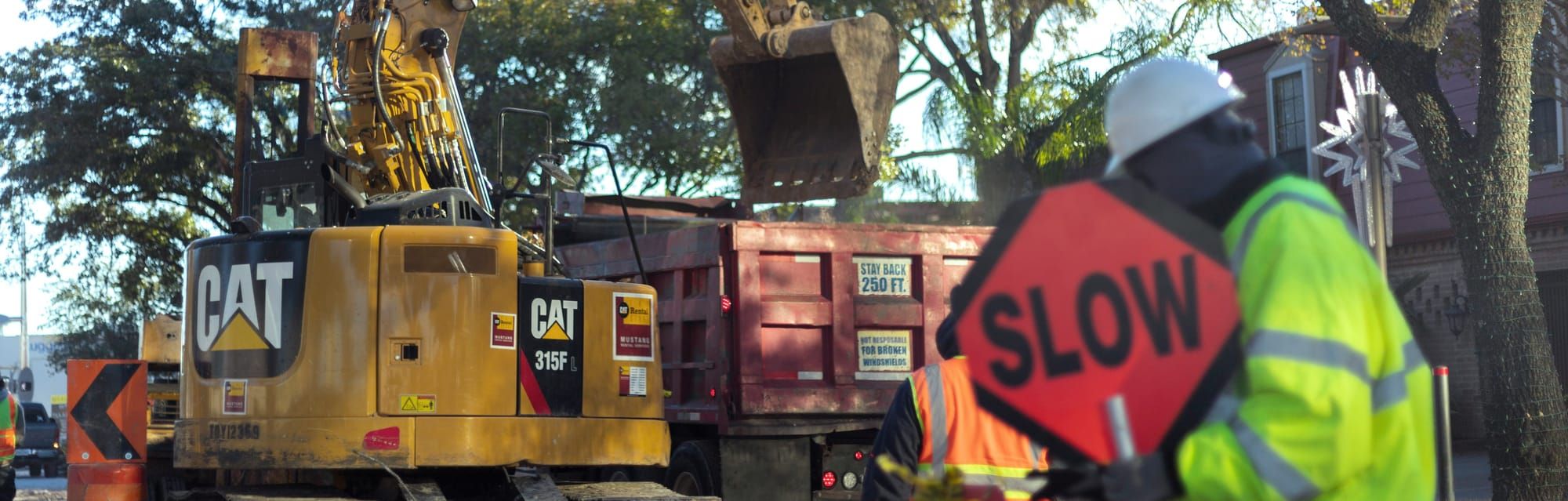
Hancock’s public works team has been “reclaiming” Kings Highway near our house. I was not sure what “reclaiming” meant when signs went up a week ahead of crews and machinery arriving, but certainly the road had been in the iron grip of nature for the last couple of years—buckled, cracked, slowly being pulled to pieces by the earth underneath. I gather now that reclaiming means taking back control from nature’s opposing forces. The machines arrived, gobbled up the broken pavement and graded, rolled, and watered the resulting dirt surface. The road is going to remain that way, unpaved, until next spring, when the machines come back and coat Kings Highway with pavement.
It is roadwork season. Wherever we go around New England, at some point we will be down to one lane. With that in mind, I would like to know the system flaggers use to manage stop and go to traffic. Is it by time, or number of cars queuing to pass? Or the requirements of crews and equipment at any given moment?
My late father-in-law insisted that if you put a human in charge of traffic flow, there will be a back-up. I have not experienced anything, ever, to disprove him. This includes law enforcement personnel forced into a traffic cop role when the streetlights are out. We can figure it out on paper, programing lights at multi-way intersections to make an orderly go of it, but give us a whistle and a Slow/Stop sign, and half mile backs-ups will follow.
In service to the common good, I try to smile and wave at the flaggers as I (eventually) go past them. This is because having an abused flagger can mean nothing good for the orderly flow of traffic. There is a lot of frustration they can take out on a line of cars stuck in summer heat if an impatient driver gets ugly with them. On larger scale projects, where one can’t see the other, flaggers have little clip-on walkie-talkies. If one has a nose out of joint, who’s to know on the other end if they are allowing traffic to back up to the state border.
Here is a quick road construction story: A few years ago, you may recall, there was a big project on route 9 through Granite Gorge. We became conditioned, heading to Keene, to drive around it via route 101, but it didn’t always make sense. Or, sometimes, we forgot. During a particularly complex construction period, we were inching our way through the gorge with our three-year-old grandson in the car—our first, and at that time, only grandchild. He taught us that having small children in the car can make a big difference, surviving roadwork season.
He was strapped in his carseat behind us, next to his mother. You may remember it was a challenging, two-year (more?) project. I don’t know where we were headed, but time was a factor as we were herded from one lane to the other, then back. SLOW, then STOP. At last, we were in sight of the heavy machinery, the trucks, the bulldozers, the front-end loaders, and a crane. It was noisy and dusty. My wife directed us to roll-up the windows. Frustrated, she said, “I hate roadwork,” which prompted a reply from our grandson that survives today as our “Easy” button when stuck in traffic.
“I wuv woadwork,” he said, as we came alongside a huffing and puffing big dozer.
On cue, the flag person flipped her sign. STOP.
Published in the Monadnock Ledger-Transcript, May 19, 2026