
Burn, Drag, Split, Stack
A pile of wood—branches and brush, or full-grown timber—imposes its presence. It can stop a truck.

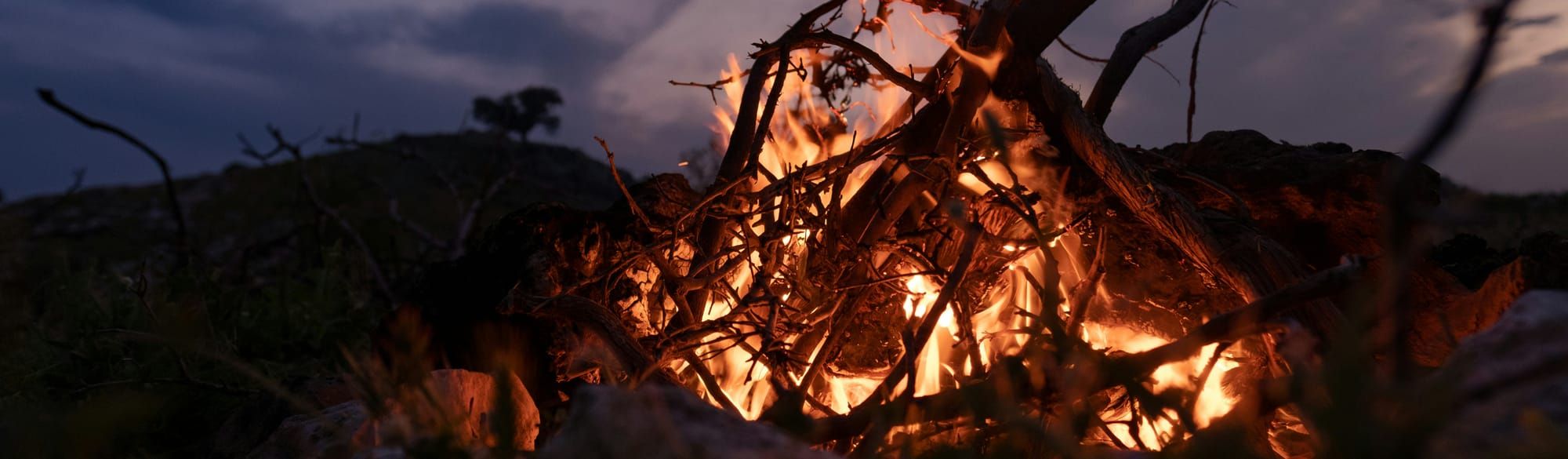
Swifty Corwin was here mid-February to drop six trees threatened by disease. We chose to keep the wood for our use next year as fuel, which means that since the snow melted, we have been burning, dragging, splitting and stacking the wood with enough intention to wear holes in two pairs of gloves.
A pile of wood—branches and brush, or full-grown timber—imposes its presence. It will not move out of the way. It can stop a truck. It will hold its position unless some heavy force is applied to it. We drag the brush, or burn it. We haul the limbs. We lift the logs. We split them by hand, with a maul, or with our 25-ton wood splitter. We could leave the pile to rot in place, but we would rot before it.
Unyielding as it is, we have been in a hurry because of the approaching growing season to have the trees sorted according to their primal cuts—logs and fat limbs for the wood stoves, branches for fencing, brush to be burned or ground for chips along our paths, or mulch around our gardens.
The constant presence of the felled trees, outside on the ground, made the two months since mid-winter speed along. It was like having a car waiting for you at the curb. You called the taxi. The taxi arrived. The taxi waited. It was there every time you looked out the window, causing you to check your watch. When you finally climbed aboard, you were confronted with how much time had ticked away on the meter because of your goodbyes and thank you’s at the door. In our case, two months, waiting mostly for the snow to melt.
Now we are trying to stay ahead of the forest understory, the ferns, and bramble, growing up around the project, obscuring our footing, hiding loose limbs. Plus, there are so many other things to do—plant lettuce, thatch the lawns, shake out the rugs. The birds are building nests feverishly, but I’ve decided they are no busier than we are. It’s not clear when they take a break, except when sleeping. But do they have a project list? It strikes me that they have an enviable workflow, all on one line: arrive, forage, build nest, incubate, wean, wait until the weather turns, head south. Our workflow spreads across a matrix. Right now, the wood demands our attention (we think of it as heat). But the line below “wood” (or heat) is “equipment maintenance,” which is necessary to the “wood” project, and also to projects under “agriculture,” such as planting and seeding. We have had to divert attention to the usual equipment servicing and repairs coming out of winter—new mower blades, oil changes, fuel filters, and the like.
“Seasonal wardrobe” has its own line. Things have to come and go from storage. (I wish I could get rid of that line by molting.) The line for “nesting” includes retrieving porch furniture, washing windows, and putting up screens. Then, of course, there is my writing—the ubiquitous “other” line—which is impacted by external, publishing matrices, attached to deadlines. All the while, free-ranging across the matrix, is our young dog, Huckleberry, workflow’s antihero. A creature of habit, with no respect for process.
But the wood pile. We’re almost there, and it will be about five cords, plus numerous limbs for use as fence posts or railings, and smaller wood for kindling. We will have the summer to lean up against the stacks, absorb their fragrance through the open windows, and regard them like we might our wine cellar—if we had one.
Until then, the taxi’s waiting.