
The Valedictorian
We chose it as our signature tree, as a centerpiece of the field—We voted it valedictorian, and class president.

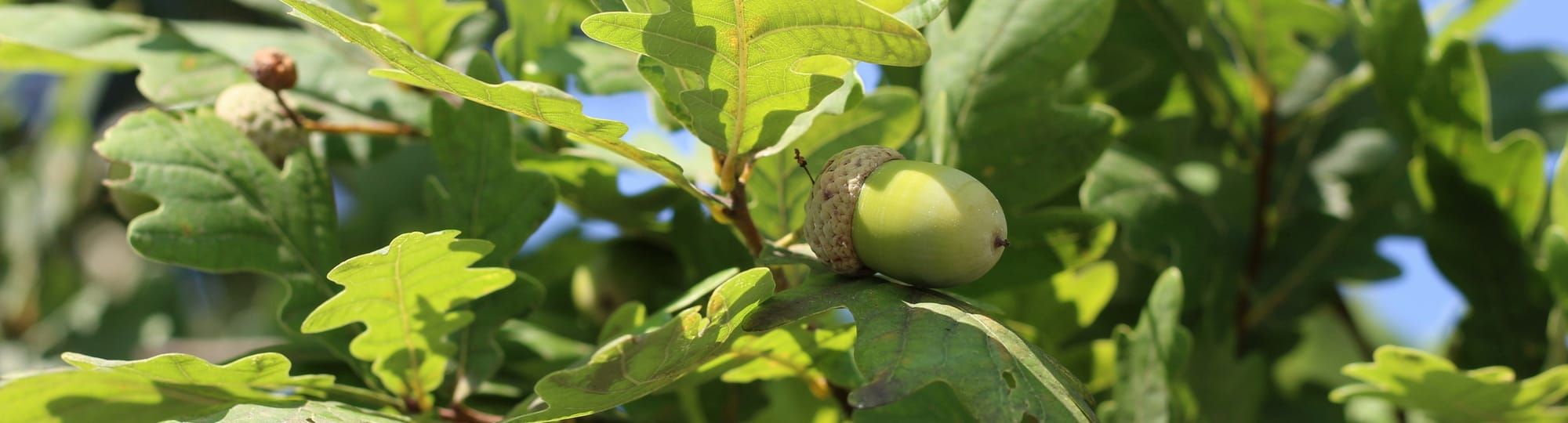
Four years ago, just about now, we cut down an acre of woods to open up some sky, and make room for vegetable gardens and wildflowers. As the trees fell, peeling away the forest layers, larger specimens emerged from behind the tangle of lower story growth. At the end, we chose one particularly handsome oak, standing ninety to hundred feet tall, being, thus, ninety to hundred years old, with a broad canopy, and strong limbs. It stood above the rest, with a view of the world, and a firm hold on the answers. We chose it as our signature tree, as a centerpiece of the field—as our Honoree. We voted it valedictorian, and class president.
Today, it is dead, the consequence, I am sure, of a broken heart.
Not everyone has given up hope. We have an expert coming back this week to examine the tree and, possibly, to start an intervention to get it to draw up nutrients from the ground again, which says to me the tree went on a hunger strike. If so, we watched it happen beginning in July last year. Gradually, over several weeks, we noticed the leaves start to curl and brown. We needed binoculars to assess what was happening at the top. I stood, looking through them repeatedly, until deciding it was some sort of blight—an insect, perhaps. A tree that had stood that long made it hard to presume to know more than it did about the situation. Out of respect, we left it alone.
By winter, the oak had failed to shed all its leaves as the rest of us were expected to do, whether shedding our leaves, or taking down screens, hauling out boats, or unpacking our woolens. It seemed opposed to all activity. Shut up and shut down. The experts counseled wait and see. Trees are vulnerable to stress. It had been a stressful few years for the oak, watching its neighborhood swept away, replaced by grasses and gardens that invited machinery in the form of lawn movers, tractors, and weed trimmers. Wait until spring was the consensus.
Spring is behind us. With my binoculars, I have looked hopefully for signs of recovery. I have stood under the tree. Examined the bark. I have talked to it. I have given it hugs. I said to my wife, “I think it looks better.” But no, it does not. It looks the same as a stopped clock, the hands in the same place every hour. Its complement of shriveled brown leaves lasted through every winter storm, and spring rain. We had a nor-easter blast through last week that stripped young, green leaves off the oaks nearer the cabin to the extent that we used the blower to rid them from the porch. All the while, our honoree refused to part with any of its remains. It clung to those dead leaves at the top like a weasel.
What was on the mind of this tree? What sadness? What amount of loneliness? Were there not so many others of its kind still around it, many of them new faces that had been hidden for years by the presence of its neighbors?
Except it has been four years since a squirrel jumped onto its branches. The hawks stop by, even an occasional osprey, both of which value its qualities as an observatory. But no one thinks to make a nest. For the squirrels, the solitary tree offers only one way up or down, with no escape left or right. For smaller birds, its branches are too close to the sky.
We know a lot more today about the hidden underground network on which trees rely. Mushrooms play a significant role. Also, particular pheromones that can warn of danger. I fear the spirit of our oak collapsed like that of any shut-in.
Am I making too much of this poor oak? I am not. I impart to this giant everything it is due because of its miraculous ascent to the top of the canopy against a billion odds, and now, its choice to turn its back on our tribute. Four years as the center of attention in the field has been enough, I guess. Like any sad elephant in a ring. Why do we insist?
It will cost, us, of course, if we can’t talk it back from the edge when the forester gets here—if we can’t pump a little enthusiasm for living into it. We will wait until the other plants have tucked in for winter, and for the ground to freeze, then bring in other experts with their cranes and saws and chippers to dismantle our oak, and grind away its stump. We will burn the wood or ship it off, as we did most of its neighbors. It will be gone.
I don’t regret clearing the land for our field. It is habitat for countless creatures, decorated by brilliant wildflowers, and open to the sky. Our garlic is thriving in the raised beds, as is our strawberry patch. Other things are growing. Falsely, I had hoped the oak would be pleased to emerge from those around it, to be the one left standing, singled out as a monument of its kind.
Wouldn’t you know, I mistook my ways for its own.