
Pocketknife - Part Six. The End.
Mother seems bright today. The mood has been dark the last several visits, overshadowed by the death of my father.

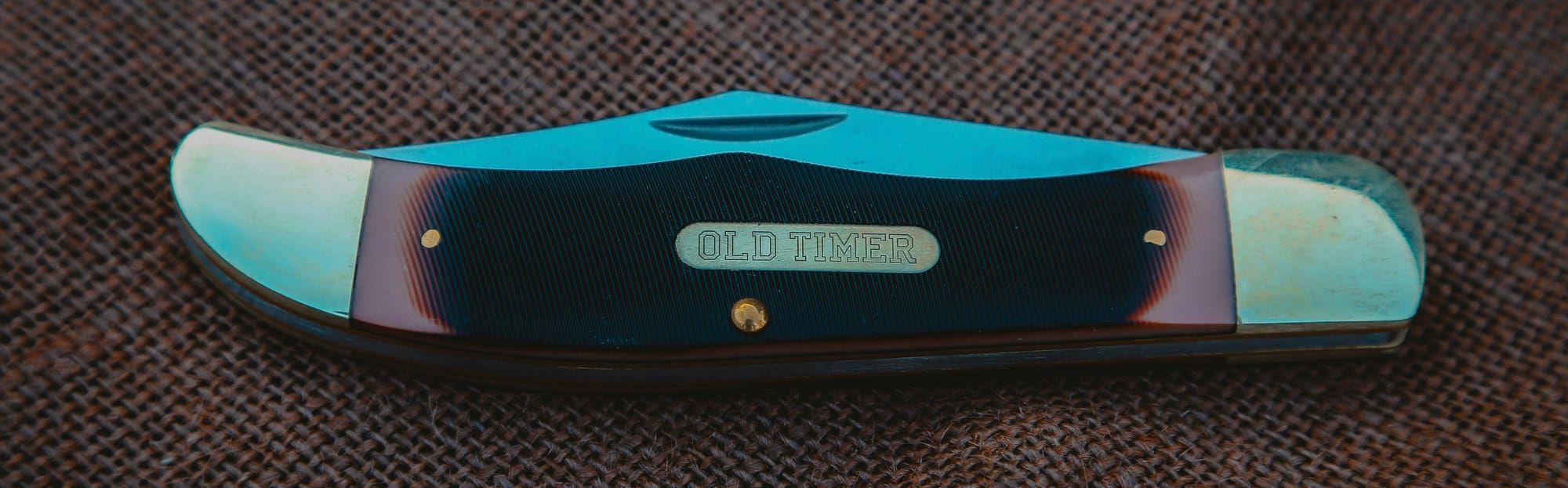
Mother lives in a retirement community about twenty minutes away, and I visit every week. I have lapsed recently, distracted by my father’s reappearance and agreeing with Claire that nothing could be said until we were able to peer deeper into the mystery. Mother has called a few times over that time, generally for computer or telephone support. She is very independent, but technology defeats her. I let Claire do most of the talking.
I park the car, walk through the sliding doors of the independent living community, and wave to the receptionist. She is on the telephone, and waves back. I scoot by.
The door to my mother’s apartment is open a crack. I knock, poke my head around and call hello.
“Look who’s here,” Mother says, speaking to her corgi, as I come in and head towards her sitting room on the far side of the open kitchen. She is at her desk, on her computer.
“Say hi to George,” she says to the dog lying under the table in front of the couch. The dog lifts its head. Mother smiles at me.
“Hello,” I say, giving her a kiss. “Sorry I have been so absent. How are you? You okay?”
“I’m fine,” she answers. “I’m writing Mary.” She points to the computer. Mary is her sister in Pennsylvania.
“How is Mary?” I ask.
“She has a cold,” responds Mother.
My mother’s apartment is neat and organized. Clutter exists only around her desk. Post-it notes line the wall in front of her, filled with computer passwords and random email addresses. Every day, she shares articles and pictures with friends via email, many examples of which are printed and scattered on the desktop. She hands me one.
“Read this from your cousin in Texas,” she says. It is a lengthy piece from the Wall Street Journal.
“I’ll take it with me,” I say.
“No. Don’t take it. I’ll email it to you. Give it back. I want to show it to Gretchen.” Gretchen lives across the hall. Gretchen does not use email.
Mother seems bright today. The mood has been dark the last several visits, overshadowed by the death of my father. She is still thin, the result of supporting my father through the last two years of his life. He spent the final six months on the nursing floor, where she sat beside him for hours at a time, eating the same cold, dismal food they serve in the ward.
“You seem well,” I say.
“Very well, thank you.”
“I’m checking in. Won’t stay long. I’m writing a story.”
“Oh, what’s it about?”
“You will have to wait and see.”
“Well, come with me, Mr. Always-in-a-hurry. Please help decide what to do with the remainder of your father’s things.”
We head through the living room toward her bedroom.
“Do you want any of these?” she asks, pointing to an assortment of my father’s hats hanging on pegs he put up on the back of the apartment door. There are a couple I will take if the size is adjustable.
Mother swings open the closet. Claire and my sisters-in-law dealt with my father’s wardrobe soon after his death, taking most of it to the Salvation Army. A few items are still hanging in the closet.
“These,” she asks. “Would they fit you?”
No. My father was appreciably larger than I am. (Which was still the case, I could point out.)
“Come over here,” and I move to where she is standing by the closet. “Up there,” she says, looking to the far end of the shelf, where a pile of old sweaters remains. “Look underneath,” she says.
I step into the closet and rummage under the sweaters to find a long leather case. I pull it out carefully, but a few sweaters fall to the floor. It is a shotgun case.
“How have we not seen this before?” I ask, alarmed.
She shrugs. “The girls didn’t get to it the first time around,” meaning Claire and my sisters-in-law.
“It’s not even supposed to be here, Mother. They don’t allow guns.”
“It belonged to your great-grandfather. Your father was attached to it.”
I will take it with me. I do not hunt, but one of my brothers does. He will be delighted, assuming it is in decent condition. I place the case on my father’s bed.
Mother says, “Come sit next to me.” We go over to her bed and sit, our backs to the bedroom door, looking out the window to the lawn behind their building. There is a bookshelf along the wall under the window and a small chair upholstered in a bright floral pattern in the corner, near the foot of her bed. She is looking at the chair, which I am not eager to have if she is about to ask. But she does not ask. Instead, she says, “I have a story for you.”
I smile. I nod. I wait while she twists her wedding band, which is loose around her finger.
“I woke up several nights ago in the middle of the night, as I always do, and your father was in that chair,” she says, pointing with a stab of her finger.
I would accept a claim from my mother, under any circumstance, that she had seen an image of my late father. But, of course, I have seen him too. It appears he is haunting the earth with some mandate to make contact, administer to children, accept invitations, and leave hints of himself in a chair. Perhaps it is all for fun, a jolly escapade. Or, is he lost? Is he trapped? He seemed to be neither when we were at dinner together.
I embrace the news, calmly. Compared to my experience, her apparition is a cloud in the sky. Her countenance is peaceful. There is a faint smile on her face. It is clear why her spirits seem so bright this morning. I am glad for her.
“That’s beautiful, Mom. What was he doing?”
Her eyes are still on the chair. “Nothing. I woke up, and he was sitting there. He was much younger, had his hair, very handsome. He was quite still. I wasn’t sure if he was looking at me. Sort of through me, like he might be thinking.”
“What did you do?”
“I said, ‘George?’ But he didn’t answer. He just sat there for several minutes. I wasn’t a bit frightened . . . which was interesting. I pulled myself up in bed, so my head was against the board. And I just looked. He looked wonderful. It made me quite happy.”
In that instant, I decide not to impose on my mother’s vision. How would we reconcile the comfort granted her by my father’s incorporeal presence with the action of three boys splashing in a lake, a young bride with ribbons in her hair, and a lamb dinner at our house?
I put my arm around her and squeeze. “Then what?”
“Then nothing,” she responds, softly. “He was just there. I wasn’t conscious of him leaving. I must have gone back to sleep. I’ve prayed for a sign, George. He was so sick. I wanted so much to know that he was okay. And there he was. Not sick. So handsome.” Her voice trails away. “It’s a miracle,” she says, and I do not disagree.
“You should have called me,” I say, aware of my double standard.
“I couldn’t decide how to talk about it. Then I decided it was private. Between your father and me. I wanted it for myself for a little while. I thought he might come back. Now I’m telling you.”
“May I tell Claire?”
“Everyone may know. I told Gretchen this morning. She’s Catholic, so she’s very pleased.”
We sit quietly, my arm still around her. A minute later, she gets up. She stops at my father’s bureau, pushes a few things around, and asks if I want any of the stray items. Not especially. I helped myself to what I wanted months ago, and now I have her vision of my father in the chair, which seals it. Claire will be agape. I can hardly wait. Yes, it was him. He was here. And he left with his knife. I do not weigh what has become of it since. Took it with him, where it sits on his bureau at 119 Maple Avenue, I suppose.
But I have not lost my mind.
Mother is rummaging through the drawers of his shaving mirror that sits on top. It is a small, brown pedestal with three inlaid drawers and an old mirror above, secured by carved posts on either side. The mirror itself is so old it barely offers a reflection. She removes a few items from one of the drawers, a length of a leather shoelace, a watch, and a couple of old presidential campaign buttons.
“Here,” Mother says with a jolt, feeling around in a different drawer and withdrawing something hidden under the fingers of her hand. “Your father’s pocketknife!” she smiles, handing the knife to me. “Look, it has your initials.”