
To Explain
The very branches where fathers courted mothers, and later supervised the first flight of youngsters, will be gone.

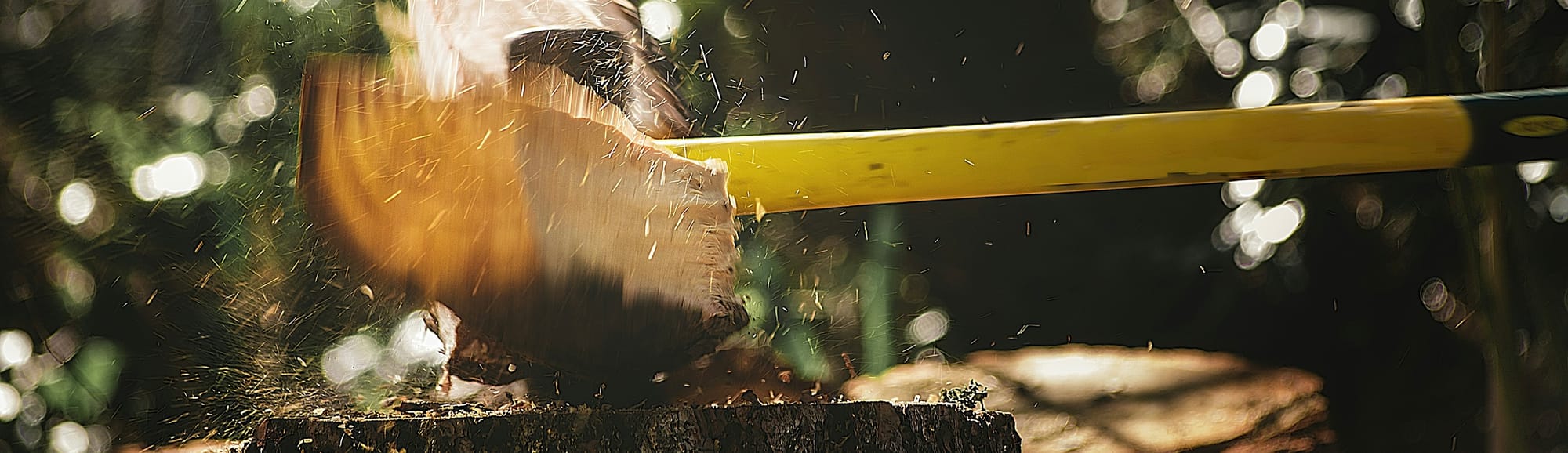
We all have a lot of “what ifs” and other things on our plate right now to worry about. On the outer edge of those concerns is an insect less than half an inch long, eradicating the ash tree. There is nothing much we’ve been able to do about it. The emerald ash borer beetle has been lethal in greater than 99% of cases, and there is no end in sight.
Working in deep snow, our forester was here a couple of weeks ago to take down four ash trees invaded by the beetle, plus two maples in the way of the felling. The two-person crew arrived with chainsaws and a big orange tractor, plus a hundred feet of chain for use dragging the trees through the woods to where they could be cut into eighteen-inch logs and left in a pile: the point being that we wanted to keep the wood for heat in the winter.
Our property between the cabin and the pond slopes down abruptly. So, all the action took place below us. The trees in question grew on the slope to the side of the house, which was the worry as they succumbed to the beetle. They were destined to topple over.
My attention stayed on the tractor. The terrain is uneven down there, deeply rutted in places by roots, and downed timber in every direction—all of it hidden under snow. The early going was a nail-biter. The two young men, one of them piloting the tractor, hung in patiently as the tractor rocked forward, backward, forward, backward, gradually making it to where it would be able to support removal of the trees.
(I believe I’ve mentioned my interest in owning a draft horse. The charm of the idea returned on this occasion.)
Anyway, the trees came down, and the tractor hauled them by chain through the snow to level ground, close to the driveway, where they were portioned. My big task, beginning shortly after this postcard makes its rounds, will be to split the pile of portioned logs and stack them for next winter. I have decided this must be done by May, ahead of the planting, gardening, and mowing season. The timing will be good for seasoning the wood.
We don’t get many regular visitors this time of year, apart from the plow guy. More than one couple, in fact, has submitted their preference not to be invited back until after mud season. But a few unsuspecting people have found their way down the driveway since the trees came down, and stood to admire the pile, which is (I should say at this point) about four cords.
Because this is New Hampshire, you can squeeze twenty minutes of conversation out of four cords that need to be split and stacked. The nuance of discussion comes down to the kind of wood and the manner of splitting. In this case, the wood is mostly ash, and the wood intelligentsia will tell you that ash is easy to split; therefore, use a maul and split by hand.
Two hundred feet away, however, is our gasoline-powered, twenty-five-ton log splitter. When the snow melts, I can reach the pile with our lawn tractor and attached wagon, load the logs, drive them back, heave them onto the splitter, and so on. The result is fewer calluses on the hands, although more lower back pain. The forest crew recommended whacking the logs in two with the maul then lifting the halves into my little wagon for transport to the splitter, where we could splinter them to matchsticks if desired. There would be no escaping all the bending and stacking, but we could make it easier on ourselves in that way in their professional opinion.
Huckleberry, who stood with me through most of that conversation, has moved on in his mind to spring. He has had enough of winter and deep snow keeping away the visiting summer traffic and squirrels, which are spending most of their time in the canopy. First thing in the morning and last thing at night, he stands outside and barks for ten minutes in search of other life. The closest he gets is the barred owl when it happens to be conducting a similar search. An exchange between the two of them has taken place a few times recently. Huck is the only one who thinks it may be building toward a relationship.
But in another month, spring may have arrived at the edge of the lawn, where we are looking forward to the crocuses. We planted more last fall. We will see how many of them make it. Also, daffodils. We added a few dozen of them in the field as early arrivals, ahead of the wildflowers. Soon enough, the world will bud.
Except returnees are going to notice the ash trees are missing. The very branches where fathers courted mothers, and later supervised the first flight of youngsters, will be gone, as well as the byways used by other creatures to climb around the property. I fear their looks behind my back, at the mountain of logs and the splitter, and the cords of stacked wood. And me, with a maul in my hand.
It was a beetle. The size of my little finger nail.